
By any measure, 2025 was an incredibly productive year for the Gulf of America Alliance, whether it’s from our leadership, our dedicated staff, or our invaluable supporters. In 2025 we moved forward vital projects, added Gulf Star partners, secured more funding, engaged key stakeholders, and so much more.
Here’s a snapshot of this year’s work:
95% – Percentage of our actions in progress or complete as part of our current Governors’ Action Plan IV
69 – Active projects This is our largest single-year number of projects ever! Forty-four projects are federally- funded and 25 are funded through our Gulf Star Program. This represents more than $22 million total in current projects.
2 – New Gulf Star partners This year we were excited to welcome Williams and Sempra Infrastructure to our growing team of organizations who help move our work forward. Stay tuned for more partners to come in 2026.
$6.8M – New funding This includes $6 million in new federal funding and $800,000 in private funding through our Gulf Star Program, demonstrating broad support from our stakeholders.
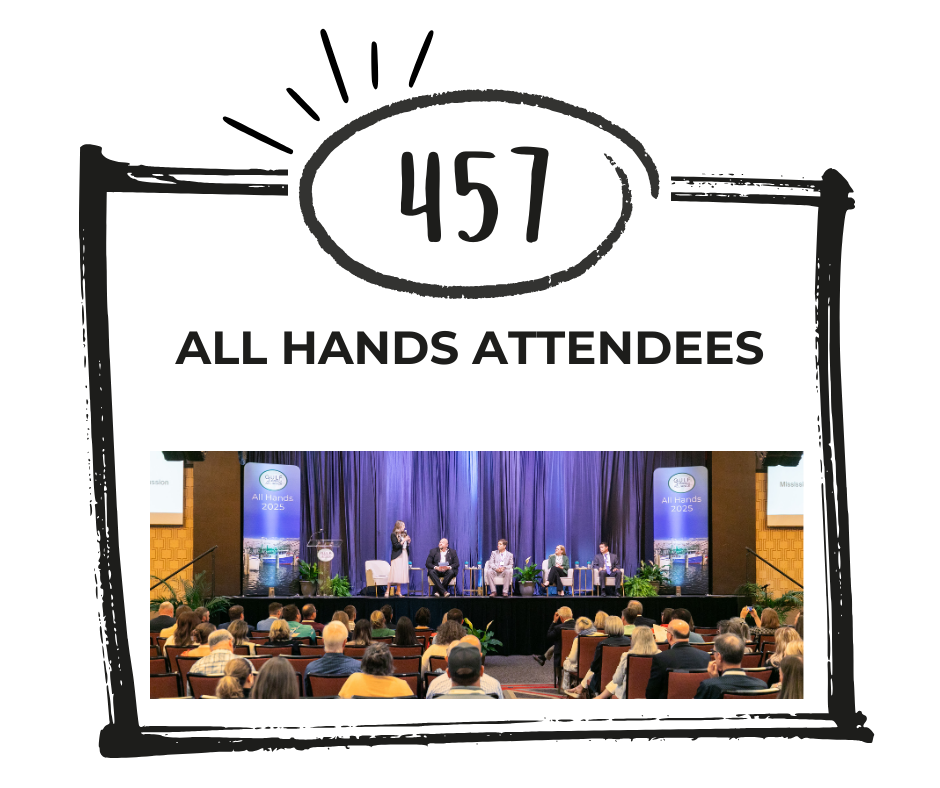
457 – Number of attendees at All Hands Meeting in Biloxi, Miss. Coastal scientists and stakeholders from 135 organizations, representing state and federal agencies, academia, non-profit organizations, and the private sector, met to build partnerships for a healthier Gulf.
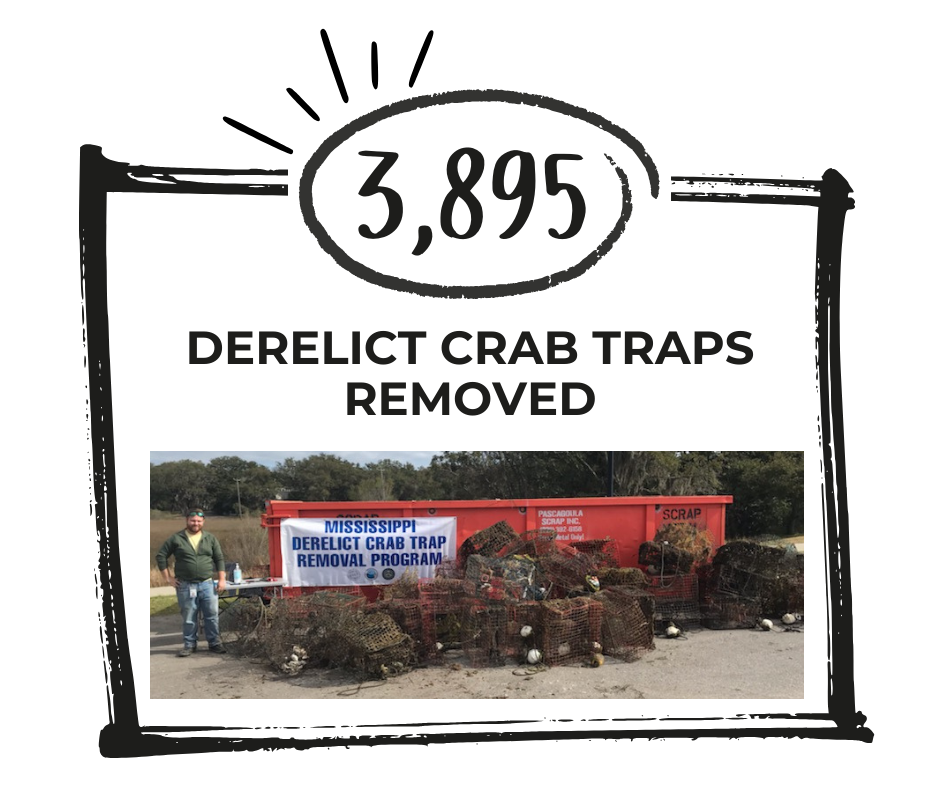
3,895 – Number of derelict crab traps removed from across the five Gulf states, along with 2,100 pounds of aquaculture debris; this work was led by the Wildlife & Fisheries Team
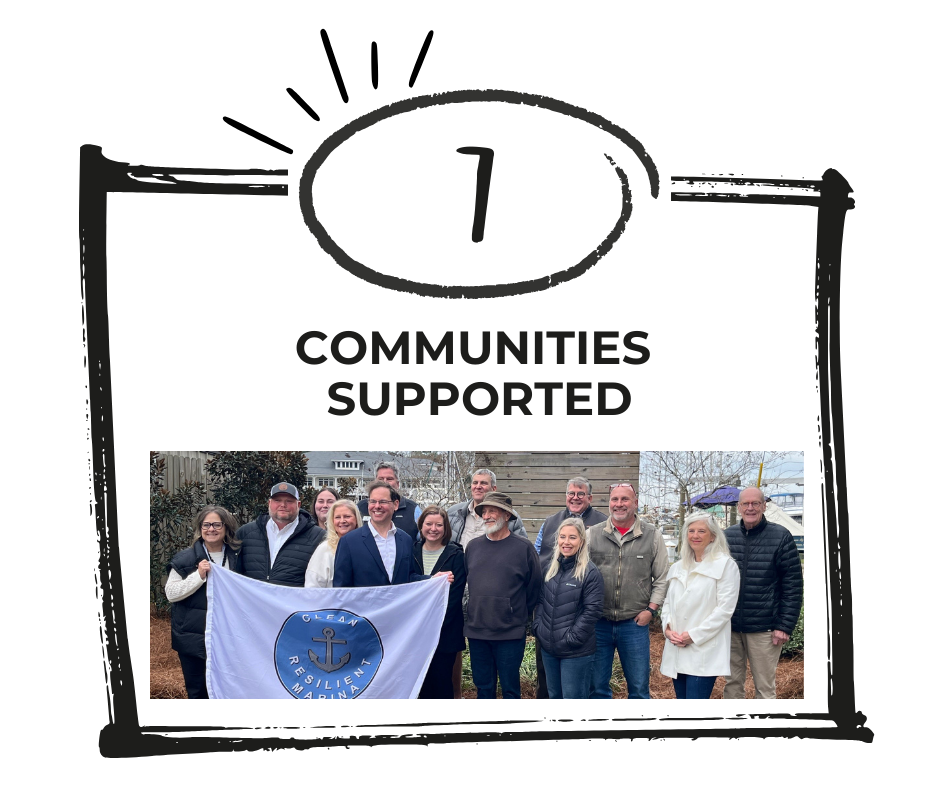
7 – Communities supported This is a vital part of our coastal community resilience work, supporting planning and implementation projects with communities Gulf-wide. This work was led by the Coastal Community Resilience Team.
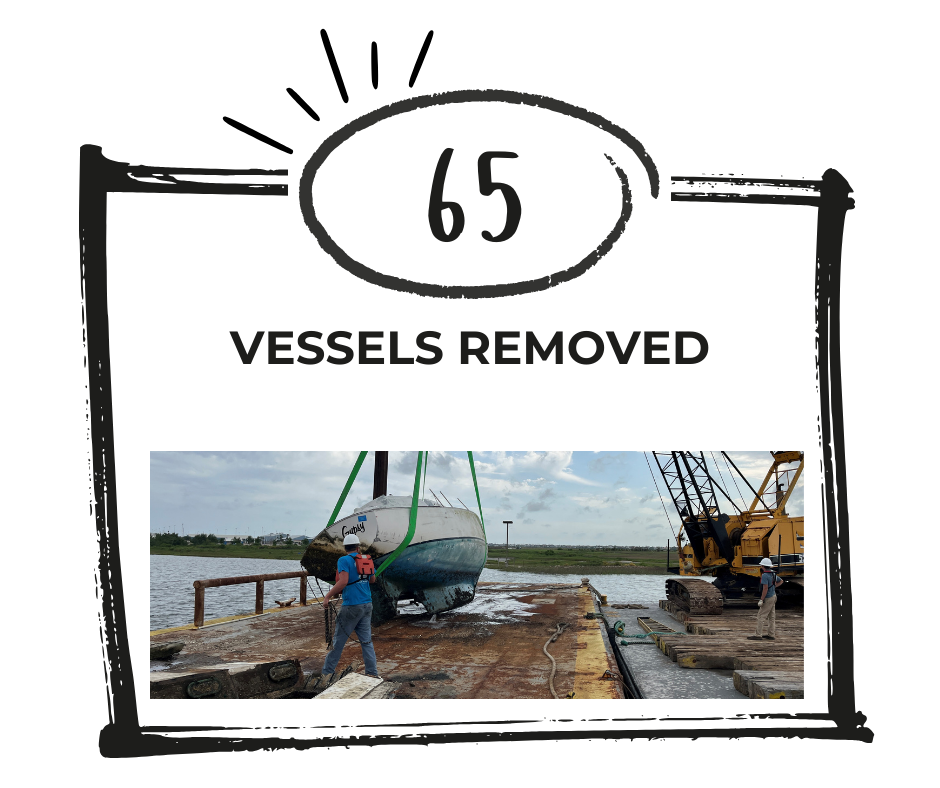
65 – Vessels removed Led by our Marine Debris Cross-Team Initiative, this work included vessel removal in Alabama, Mississippi, and Texas.
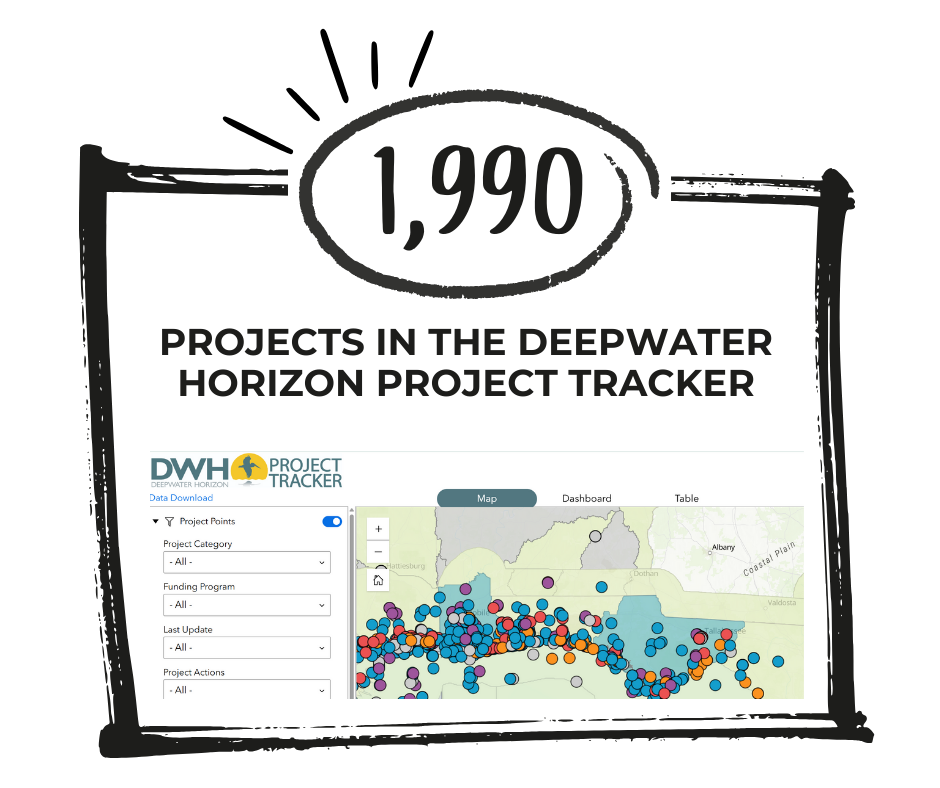
1,990 – Projects in the Deepwater Horizon Project Tracker; this work, led by the Data & Monitoring Team, centers on restoration, research, and recovery projects resulting from the 2010 Deepwater Horizon oil spill
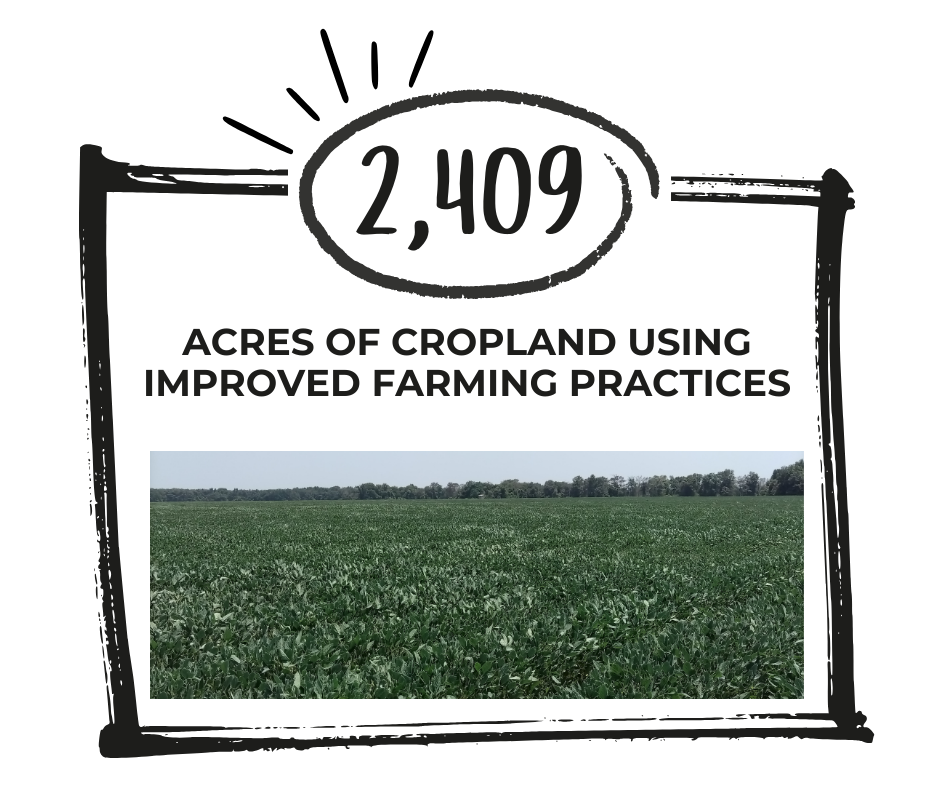
2,409 – Acres of cropland using improved farming practices This is part of work by the Water Resources Team to reduce excess runoff that enters local waterways in the Bayou Lafourche watershed in Louisiana, using innovative farming practices.
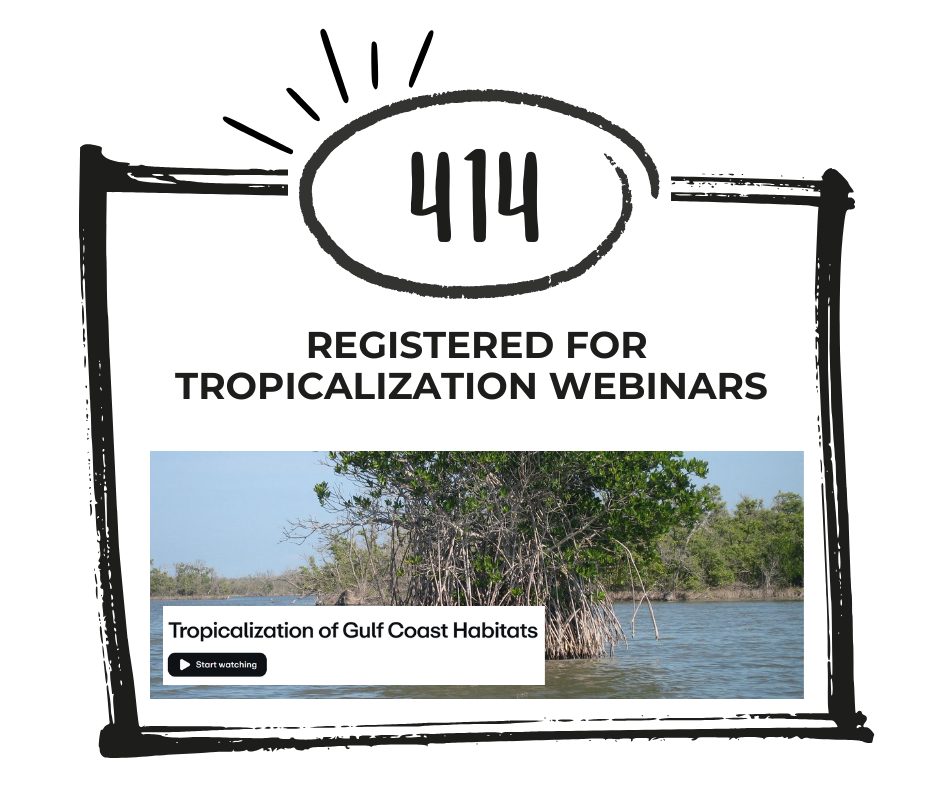
414 – Registered for tropicalization webinars Topics included ways tropical species are expanding their ranges north as temperatures warm, mangrove expansion, and related management challenges in Florida, Louisiana, and Texas. This work was led by the Habitat Resources Team.
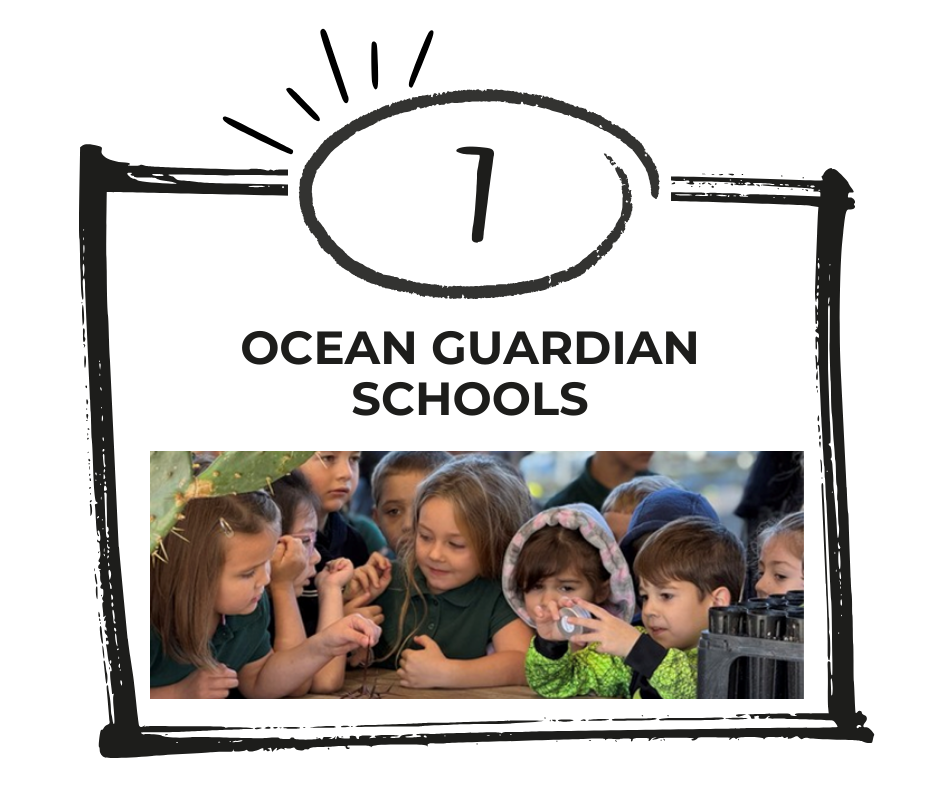
7 – Number of Ocean Guardian Schools Focused on coastal watershed stewardship, students at these schools implement a community or school-based conservation project. Schools supported in 2025 are located in Port Arthur, East Houston, and Galveston County, Texas; Pointe-Au-Chien, Morgan City, and West Feliciana, Louisiana; and Robertsdale, Alabama. This effort is led by the Education & Engagement Team.
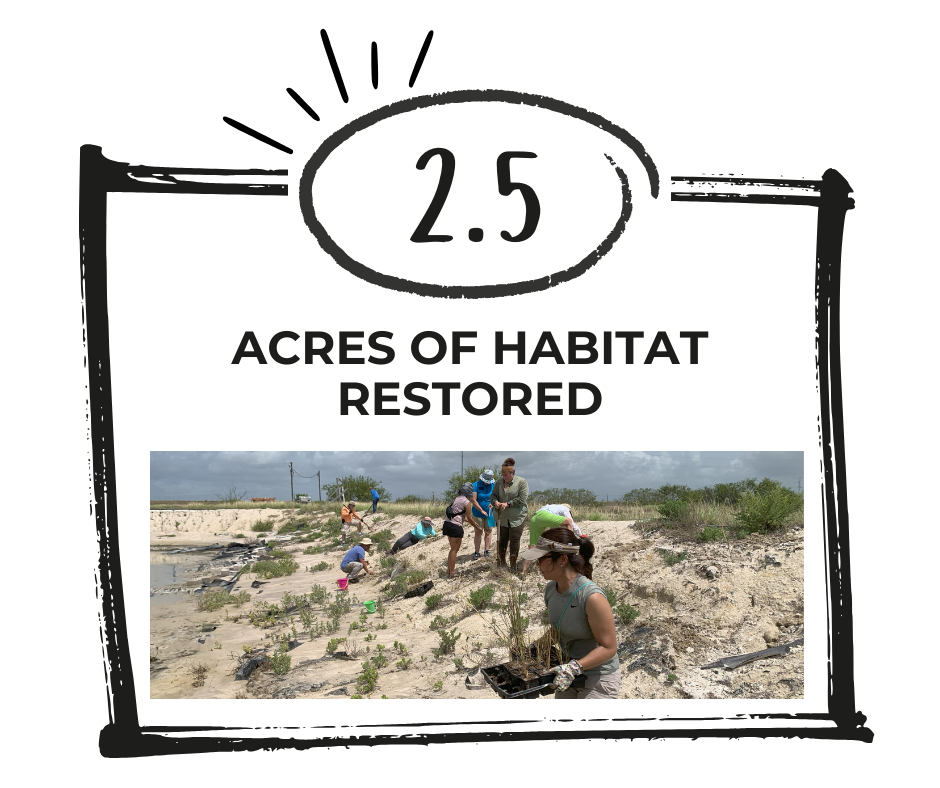
2.5 – Acres of habitat restored Local high-school students gained hands-on experience in STEM-related career opportunities while growing native marsh grasses. These grasses were used to create a living shoreline in Flour Bluff (near Corpus Christi in the Texas Coastal Bend). This work was led by the Integrated Planning Cross-Team Initiative.
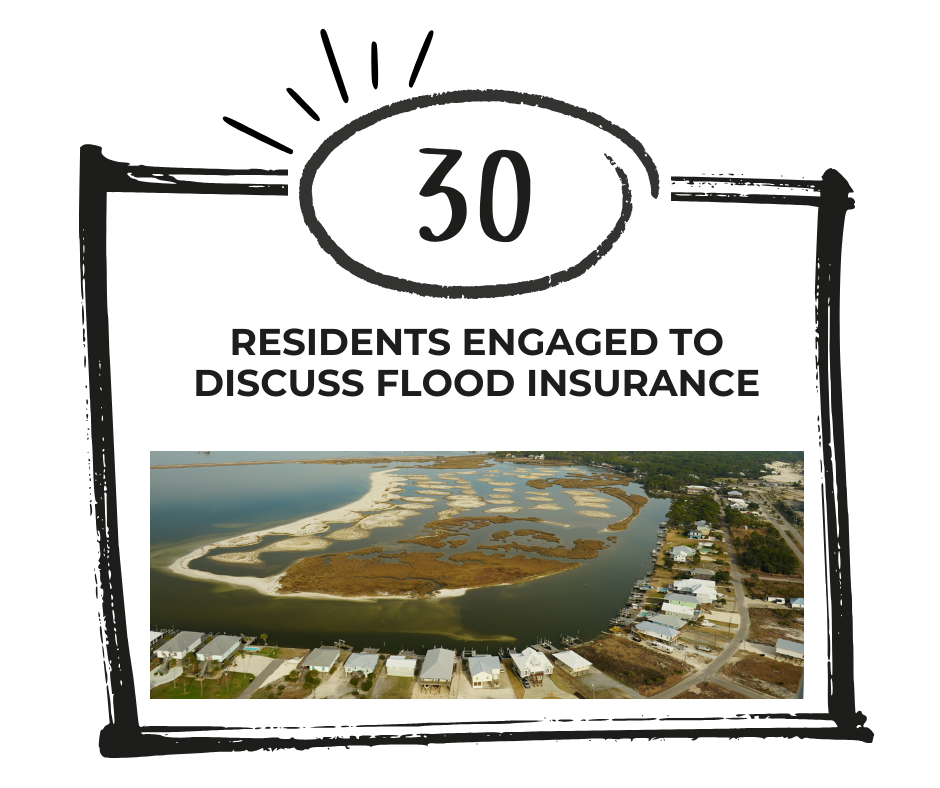
30 – Residents engaged to discuss how newly rebuilt marshes reduce flood risk for nearby homes; this will better inform residents as they work to lower their insurance rates. This project is led by the Human Benefits of Nature Cross-Team Initiative.